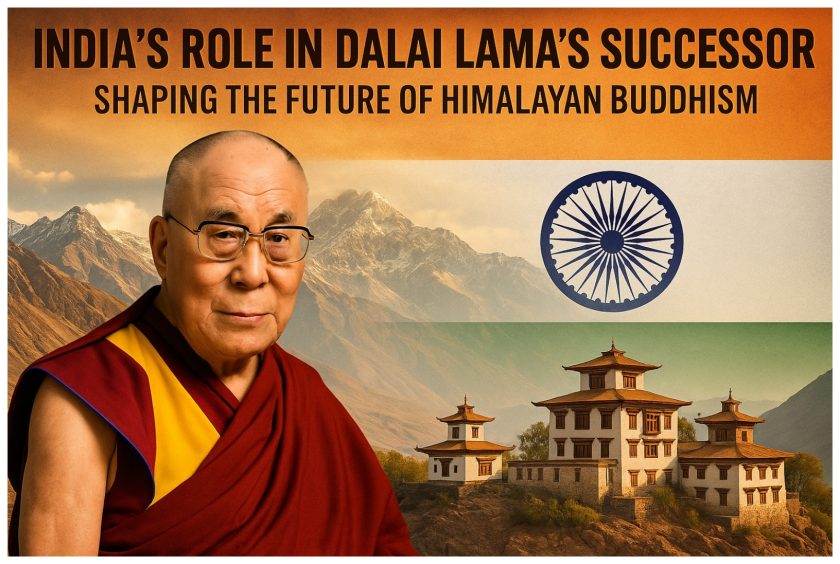
India’s Role in Dalai Lama’s Successor: Shaping the Future of Himalayan Buddhism
India’s Role in Dalai Lama’s Successor: Shaping the Future of Himalayan Buddhism
Introduction
The question of who will succeed the 14th Dalai Lama is not merely a spiritual matter—it is a geopolitical issue that could reshape the future of Himalayan Buddhism and Tibet-China relations. India, home to the Dalai Lama in exile and thousands of Tibetan refugees, is a key player in this global debate. The country’s stance will determine not only the future of Tibetan Buddhism but also its influence across the Himalayan belt, from Ladakh to Arunachal Pradesh.
Why Dalai Lama’s Successor Matters
The Dalai Lama is not just a religious leader; he is the spiritual heart of Tibetan Buddhism and a symbol of Tibetan identity. His successor will hold immense influence over the Tibetan community worldwide. Traditionally, the Dalai Lama is chosen through a process of reincarnation, as per Tibetan Buddhist customs. However, China has made it clear that it intends to control the succession, appointing its own candidate.
For India, this isn’t only about religion—it’s about safeguarding cultural heritage, maintaining Himalayan stability, and countering China’s expansionist ambitions.
India’s Historical Role in Tibetan Buddhism
India has been the cradle of Buddhism since the time of Gautam Buddha, and it has deep spiritual ties to Tibet. When the 14th Dalai Lama fled Tibet in 1959 after the Chinese takeover, India granted him asylum and allowed the Tibetan government-in-exile to operate from Dharamshala, Himachal Pradesh.
This move strengthened India’s moral position globally and cemented its image as a protector of religious freedom. Over decades, India has nurtured Tibetan culture by supporting monasteries, education, and refugee communities.
Also Read
Ashoka Vijayadashami: The Festival of Dharma, Victory & Inner Revolution
Samrat Ashok : महान मौर्य सम्राट का जीवन, युद्ध और बौद्ध धर्म की ओर यात्रा
India’s Current Stand on the Successor Debate
While India has not officially declared a position on the Dalai Lama’s successor, its actions signal support for the traditional Tibetan method of choosing the next leader—without Chinese interference. India’s Ministry of External Affairs maintains that the issue is purely religious and should be decided by the Tibetan people and Buddhist leaders.
By keeping its official stance subtle, India avoids directly provoking China while still signaling solidarity with the Tibetan cause.
Impact on Himalayan Buddhism
The Himalayan belt—spanning Ladakh, Himachal Pradesh, Sikkim, and Arunachal Pradesh—is home to millions of Buddhists who follow the Dalai Lama’s teachings. The successor question will directly affect their spiritual guidance and cultural identity.
- Ladakh: Monasteries here have centuries-old ties to Tibet. Any dispute over the successor could divide the monastic community.
- Arunachal Pradesh: This state has a large Tibetan Buddhist population and has been a flashpoint in India-China tensions. Supporting the Tibetan process strengthens local loyalty to India.
- Sikkim: The monasteries of Rumtek and Tashiding are important centers of Himalayan Buddhism that look to the Dalai Lama for moral leadership.
India’s continued support helps preserve Buddhist traditions and strengthens cultural bonds in border states—crucial for national security.
Also Read
Ashoka Vijayadashami: The Festival of Dharma, Victory & Inner Revolution
Samrat Ashok : महान मौर्य सम्राट का जीवन, युद्ध और बौद्ध धर्म की ओर यात्रा
China’s Interference and India’s Diplomatic Challenge
China claims the right to select the next Dalai Lama, citing its control over Tibet. This is part of a larger strategy to absorb Tibetan Buddhism into the state-controlled Chinese Buddhist Association.
If China appoints its own Dalai Lama and India refuses to recognize him, it will trigger a spiritual and political standoff. India will need to balance its support for Tibetan traditions with maintaining diplomatic ties with Beijing.
Global Implications of India’s Stand
India’s stance on the Dalai Lama succession will resonate far beyond the Himalayas:
- United States & Western Allies: Many democratic nations support the Tibetan right to choose their leader. India’s alignment with them strengthens international alliances.
- Buddhist Nations: Countries like Bhutan, Mongolia, and Sri Lanka look to India for leadership in Buddhist matters.
- China Relations: India’s position could worsen already strained ties with China, especially after border clashes in Galwan and ongoing disputes in Arunachal Pradesh.
India’s Soft Power Advantage
Supporting the Tibetan cause boosts India’s soft power. Cultural diplomacy—through Buddhist sites like Bodh Gaya, Nalanda, and Sarnath—positions India as the global guardian of Buddhism. Hosting international Buddhist conferences and encouraging Himalayan tourism also strengthens India’s influence.
Preserving Tibetan Culture in India
Beyond politics, India’s role is vital for preserving Tibetan culture. Tibetan schools, monasteries, and settlements across Himachal Pradesh, Karnataka, and other states keep traditions alive. The successor debate is thus directly tied to the survival of Tibetan heritage in exile.
Possible Scenarios for the Future
- Traditional Tibetan Selection in Exile: India supports the process, recognizing the leader chosen by the Dalai Lama’s trusted lamas.
- China-Backed Dalai Lama in Tibet: Beijing installs its own leader, rejected by Tibetan Buddhists worldwide.
- Dual Dalai Lama Scenario: Two rival Dalai Lamas emerge, leading to a split in the Buddhist community. India would recognize only the traditional leader.
Conclusion
India’s role in the Dalai Lama succession is not just about religious freedom—it is a strategic move in the Himalayas’ geopolitical chessboard. By supporting the Tibetan process, India safeguards Buddhist traditions, strengthens its border states, and positions itself as a global defender of spiritual autonomy.
The coming years will be crucial. As the 14th Dalai Lama advances in age, the world will watch closely how India navigates this delicate balance between faith, culture, and diplomacy.
Mangesh, if you want, I can now create the featured image for this blog with a perfect composition for your website’s SEO boost.
Do you want me to generate it?
#DalaiLama #HimalayanBuddhism #Tibet #IndiaTibet #Buddhism #DalaiLamaSuccessor #TibetanCulture #IndiaDiplomacy #TibetChina #ReincarnationDebate
Note:
Jai Bhim! Namo Buddhay! Friends, welcome to Nagvanshingo. If you find any information on our page incorrect or if you would like to share! any additional! information! with us, please contact us at nagbbs50@gmail.com