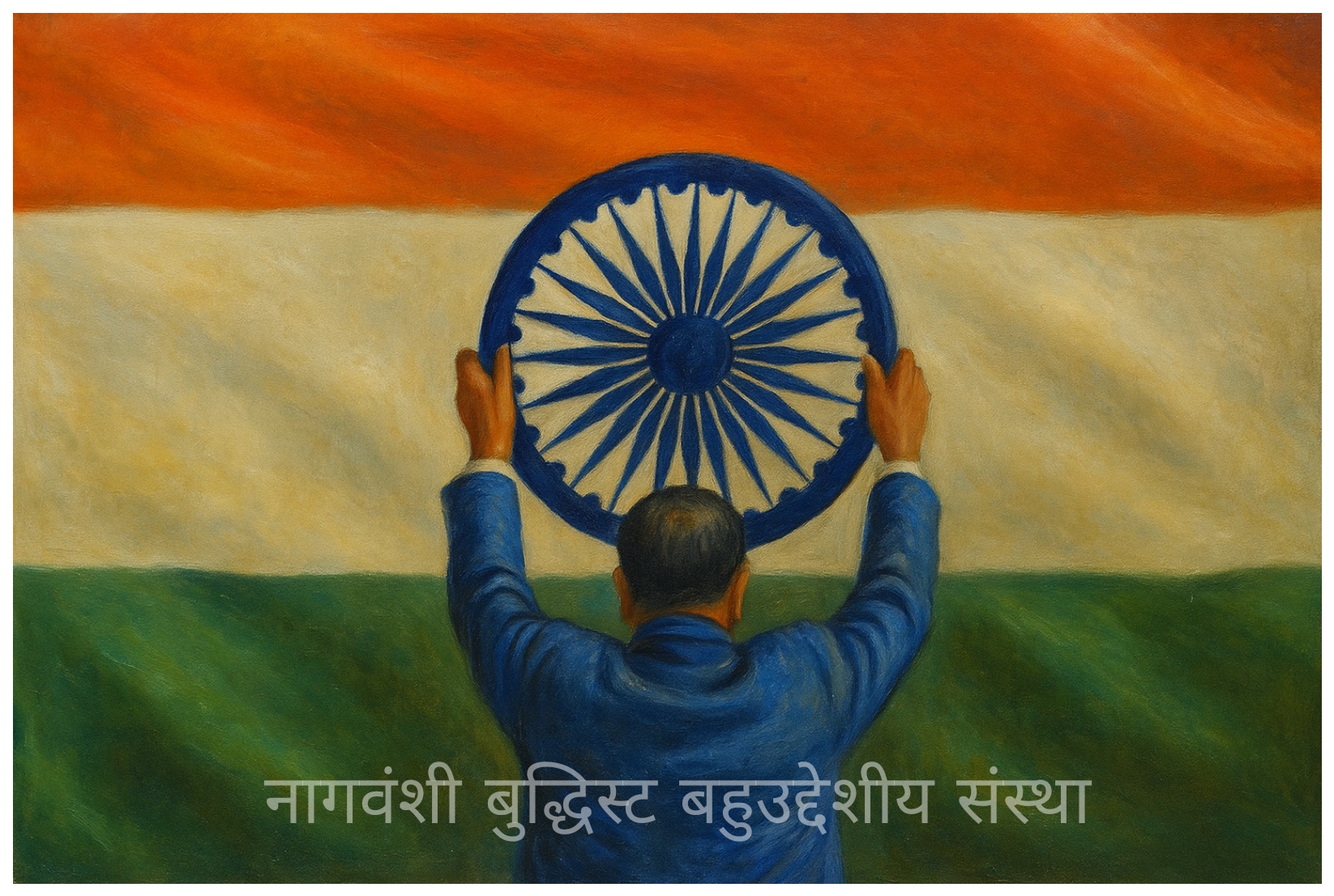
Why Dr. Babasaheb Ambedkar Chose the Ashoka Chakra for the Indian Flag
Why Dr. Babasaheb Ambedkar Chose the Ashoka Chakra for the Indian Flag – The Untold Story Behind the Tricolor
The Indian national flag is not just a symbol of independence; it is a representation of the values and vision of our nation. While many recognize the tricolor – saffron, white, and green – fewer know the deeper significance behind the Ashoka Chakra at its center.
An often-overlooked part of this story is the ideological influence of Dr. Babasaheb Ambedkar, whose deep understanding of Indian! philosophy and Buddhist! principles helped shape this! meaningful! choice.
In this blog, we explore the story of why the Ashoka Chakra was chosen for the Indian flag and how Dr. Ambedkar’s vision played a key role in that! decision.
The Indian Tricolor – A Symbol Beyond Colors
The Indian national flag comprises three horizontal bands of color:
- Saffron at the top symbolizes courage and sacrifice.
- White in the middle stands for peace and truth.
- Green at the bottom represents faith and prosperity.
But the most distinct! and meaningful element is the navy-blue Ashoka Chakra in the center of the white band. This wheel, with 24 spokes, is a symbol of righteousness (Dharma), justice, and progress.
This chakra was not always a part of the flag. Initially, during the freedom struggle, a spinning wheel (charkha) was used in the center, popularized by Mahatma Gandhi.
However, post-independence, a more unifying and timeless symbol was needed—one that stood above politics and truly reflected India’s spiritual and philosophical depth.
Dr. Babasaheb Ambedkar’s Influence on National Symbols
Though Pingali Venkayya is credited with designing the original tricolor flag, the final design adopted by the Constituent Assembly on 22nd July 1947 replaced the charkha with the Ashoka Chakra.
This change was influenced by the discussions and ideals emerging from various leaders, including Dr. B.R. Ambedkar.
Ambedkar, the principal architect of the Indian Constitution, was a visionary who deeply understood the importance of symbolism in nation-building. His extensive studies in Indian history, Buddhism, and philosophy made him a strong advocate for symbols that represented justice, equality, and morality.
For Ambedkar, the Ashokan wheel was not just a historical emblem – it was a representation of Dharma (righteous duty), a principle central to Buddhist teachings. He believed India should embrace symbols that reflected its values of equality, liberty, and justice—principles also enshrined in the Constitution he helped frame.
Why the Ashoka Chakra Was Chosen
The decision to adopt the Ashoka Chakra in place of the spinning wheel was not taken lightly. It had to represent:
- A non-political, non-religious identity.
- A spiritual and moral compass.
- A universal symbol of progress and unity.
The Ashoka Chakra, which appears on the Lion Capital of Ashoka (the national emblem), fit these requirements perfectly.
Dr. Ambedkar’s admiration for Emperor Ashoka’s transformation—from a violent conqueror to a peace-loving ruler who embraced Buddhism—played a key role in supporting the idea of this symbol. For Ambedkar, Ashoka was the first great ruler who ruled not with the sword but with compassion and Dharma.
Symbolism of the 24 Spokes
Each spoke of the Ashoka Chakra has deep meaning. They represent 24 principles of righteous living and Dharma, including:
- Love
- Courage
- Patience
- Peace
- Kindness
- Good conduct
- Honesty
- Selflessness
- Self-control
- Forgiveness
- Justice
- Loyalty
- Truth
- Welfare
- Awareness
- Faith
- Purity
- Generosity
- Wisdom
- Morality
- Duty
- Hope
- Determination
- Sacrifice
These are not merely spiritual values but are also the foundation of a just society, which Ambedkar envisioned for the newly independent India.
From Charkha to Chakra – A Shift in Ideology
While the charkha (spinning wheel) symbolized the Swadeshi movement and Gandhian ideals of self-reliance, it was seen as closely tied to the freedom movement’s specific political context.
The Ashoka Chakra, however, represented timeless values – not just freedom from colonialism but also freedom from injustice, inequality, and social discrimination. These were the very battles that Ambedkar fought throughout his life, especially for the upliftment of Dalits and marginalized communities.
The chakra was seen as more inclusive, universal, and eternal, making it a better choice for representing the nation’s identity in the post-independence era.
Dr. Ambedkar and Buddhism – A Deeper Connection
Dr. Ambedkar embraced Buddhism in 1956, but his connection with Buddhist values began much earlier. The Ashoka Chakra is derived from Buddhist symbolism, found at Sarnath, where Buddha gave his first sermon.
This chakra, also known as the Dharmachakra (Wheel of Dharma), represents the path to enlightenment and justice.
Ambedkar believed that Buddhism offered the ethical foundation India needed – a religion that rejects caste and promotes equality.
By supporting the use of the Ashokan wheel, he was bringing attention to India’s Buddhist heritage, which emphasized compassion, rationality, and social responsibility.
Clarifying the Truth: Ambedkar’s Role in the Flag Design
It is important to clarify that Dr. Ambedkar was not officially the designer of the Indian flag. However, his philosophical influence and strong support for symbols representing justice and equality played a significant role in shaping national discussions during that era.
While the flag was officially adopted by the Constituent Assembly, many scholars and historians acknowledge that Ambedkar’s ideas greatly influenced the final design, especially the adoption of the Ashoka Chakra.
Legacy of the Ashoka Chakra Today
Today, the Ashoka Chakra in the Indian flag is not just a decoration; it is a reminder of the values our nation is built upon. Every time the flag is hoisted, the 24-spoked wheel silently speaks of Ambedkar’s dream—a nation where justice, equality, and morality guide our path.
The chakra is also featured on Indian currency, passports, and official documents – reinforcing its central role in India’s identity.
Conclusion
The Ashoka Chakra in the center of the Indian tricolor is much more than a design element—it is a powerful symbol of Dharma, progress, and unity.
While Dr. Babasaheb Ambedkar did not design the flag, his ideological influence and vision for a just India helped shape the decision to include this timeless Buddhist symbol.
Through the Ashoka Chakra, India acknowledges not just its ancient past, but also its commitment to a fair and inclusive future—a future that Ambedkar fought for all his life.
It stands as a silent tribute to his ideals and his lasting legacy in building the moral backbone of our democracy.
Note:
Jai Bhim! Namo Buddhay! Friends, welcome to Nagvanshingo. If you find any information on our page incorrect or if you would like to share any additional information with us, please contact us at nagbbs50@gmail.com.