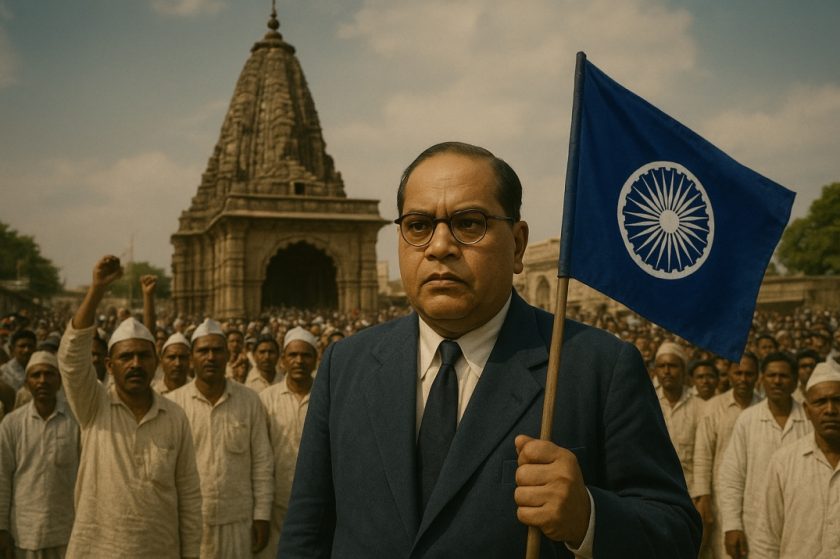
Kala Ram Mandir Satyagraha 1930: Dr. B.R. Ambedkar’s Historic Fight for Social Justice
Kala Ram Mandir Satyagraha 1930: Dr. B.R. Ambedkar’s Historic Fight for Social Justice
Introduction
Indian history is marked by several powerful social movements that reshaped society and paved the way for equality. Among these, the Kala Ram Mandir Satyagraha of 1930, led by Dr. B.R. Ambedkar, stands as one of the most significant. This movement took place in Nashik, Maharashtra, and aimed at challenging the age-old practice of untouchability and denying Dalits access to Hindu temples.
The struggle at the Kala Ram Temple was not merely about entering a place of worship. It symbolized the larger fight for human dignity, social justice, and equal rights. In this blog, we explore the history, events, significance, and impact of the Kala Ram Mandir Satyagraha, along with the lessons it offers for modern governance and society.
Historical Background
The Kala Ram Mandir is one of the oldest and most prominent temples in Nashik, Maharashtra, dedicated to Lord Rama. The temple held not only religious significance but also social and cultural importance for the people of the region.
However, before 1930, Dalits (then known as “untouchables”) were forbidden from entering the temple or even approaching its premises. This was a reflection of the deeply rooted caste discrimination that existed in Indian society. Dalits were denied access to temples, wells, schools, and other public spaces.
Also Read
Ashoka Vijayadashami: The Festival of Dharma, Victory & Inner Revolution
Samrat Ashok : महान मौर्य सम्राट का जीवन, युद्ध और बौद्ध धर्म की ओर यात्रा
Dalai Lama’s Successor: The Battle Between Buddhist Tradition and China’s Political Ambitions”
The Dhamma Policy of Ashoka: Lessons for Modern Governance
The temple entry movement was part of a broader campaign led by Dr. B.R. Ambedkar to secure equality and dignity for the oppressed classes. By the late 1920s, Ambedkar had already organized several movements like the Mahad Satyagraha (1927), where Dalits asserted their right to drink water from a public tank. The Kala Ram Mandir Satyagraha was a continuation of this struggle, specifically focusing on religious and spiritual equality.
The Kala Ram Mandir Satyagraha: The Event
On 2nd March 1930, thousands of Dalits, under the leadership of Dr. B.R. Ambedkar, gathered in Nashik to demand entry into the Kala Ram Temple.
- The satyagrahis marched in an organized manner, chanting slogans of equality and justice.
- They appealed to the temple authorities to allow them entry as they were Hindus and had equal right to worship.
- Despite being peaceful and non-violent, the movement faced strong opposition from orthodox groups. The temple gates were kept closed, and the protesters were prevented from entering.
Although the Dalits could not enter the temple on that day, the Kala Ram Mandir Satyagraha became a landmark movement in Indian history. It brought national attention to the issue of untouchability and temple entry rights.
Role of Dr. B.R. Ambedkar
Dr. Ambedkar played a pivotal role in conceptualizing and leading the movement:
- Leadership & Organization: Ambedkar mobilized thousands of Dalits across Maharashtra and united them under a common cause.
- Ideological Foundation: He argued that if Hinduism did not allow equality, Dalits had to question their place in the religion.
- Non-Violent Protest: The satyagraha was conducted peacefully, following democratic and constitutional values.
- Symbolic Resistance: Ambedkar understood that temple entry symbolized not just religious access but also social recognition of equality.
Also Read
Ashoka Vijayadashami: The Festival of Dharma, Victory & Inner Revolution
Samrat Ashok : महान मौर्य सम्राट का जीवन, युद्ध और बौद्ध धर्म की ओर यात्रा
Dalai Lama’s Successor: The Battle Between Buddhist Tradition and China’s Political Ambitions”
The Dhamma Policy of Ashoka: Lessons for Modern Governance
Impact of the Satyagraha
The immediate outcome may not have been temple entry, but the long-term consequences were monumental:
- Awakening among Dalits: The movement gave Dalits a sense of collective power and unity.
- Challenge to Caste Hierarchy: It questioned the moral legitimacy of caste-based discrimination.
- Foundation for Future Struggles: This movement laid the groundwork for Ambedkar’s future decisions, including his eventual conversion to Buddhism in 1956.
- National Debate: The issue of caste and temple entry gained attention from leaders across India.
Lessons from Kala Ram Mandir Satyagraha for Modern India
The struggle of 1930 is not just a historical event; it continues to hold relevance today. Some important lessons include:
- Equality Before Law: No community should be denied rights based on caste, religion, or gender.
- Peaceful Resistance: The satyagraha proved that non-violent protest can challenge unjust systems.
- Social Inclusion: Real democracy is incomplete without social justice and inclusion of marginalized groups.
- Faith vs. Humanity: Religious practices must evolve with time to uphold human dignity and equality.
- Inspiration for Governance: Ambedkar’s movement inspires governments today to focus on inclusive policies and social reforms.
Current Status of Kala Ram Mandir
Today, the Kala Ram Mandir in Nashik is open to all, including Dalits, though the historical wounds remain part of India’s memory. The site is not just a place of worship but a symbol of resistance and social change. Every year, people gather to pay tribute to the movement and Dr. Ambedkar’s leadership.
Conclusion
The Kala Ram Mandir Satyagraha of 1930 was more than a fight for temple entry—it was a struggle for dignity, equality, and justice. Led by Dr. B.R. Ambedkar, the movement challenged centuries-old discrimination and gave voice to millions of oppressed people.
Also Read
Ashoka Vijayadashami: The Festival of Dharma, Victory & Inner Revolution
Samrat Ashok : महान मौर्य सम्राट का जीवन, युद्ध और बौद्ध धर्म की ओर यात्रा
Dalai Lama’s Successor: The Battle Between Buddhist Tradition and China’s Political Ambitions”
The Dhamma Policy of Ashoka: Lessons for Modern Governance
In modern India, as we continue to strive for an inclusive society, the lessons of Kala Ram Mandir Satyagraha remind us that true freedom is incomplete without social equality. The courage and vision of Ambedkar continue to inspire movements for justice across the world.
#KalaRamMandir #Ambedkar #SocialJustice #DalitRights #IndianHistory #TempleEntryMovement #AmbedkarJayanti #EqualityForAll #babasahebsatyagrah #nashikmandir #nashiksatyagrah
Note:
Jai Bhim! Namo Buddhay! Friends, welcome to Nagvanshingo. If you find any information on our page incorrect or if you would like to share any! additional! information! with us, please contact us at nagbbs50@gmail.com