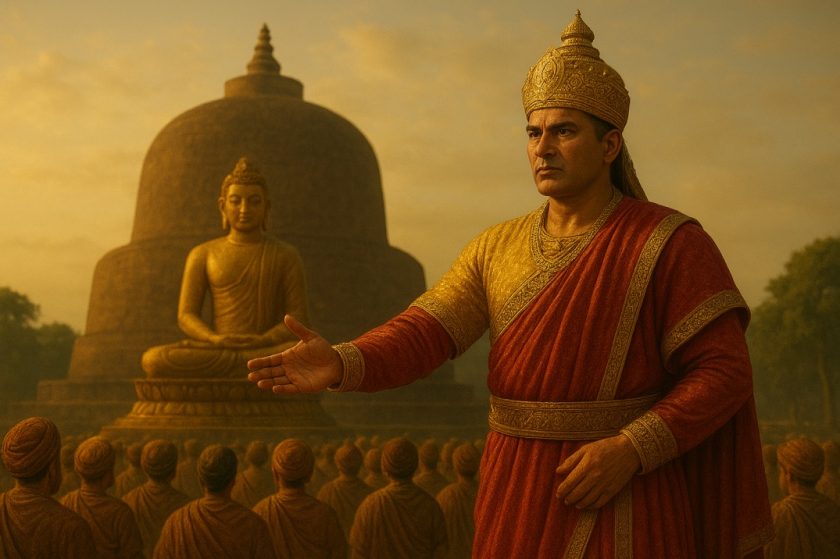
The Dhamma Policy of Ashoka: Lessons for Modern Governance
The Dhamma Policy of Ashoka: Lessons for Modern Governance
Ashoka the Great, also known as Ashok Samrat, remains one of the most influential figures in history. As the third ruler of the Maurya Dynasty, his empire stretched across most of the Indian subcontinent. While his early reign was marked by military conquests, the devastating Kalinga War changed his outlook on life and governance Ashoka Dhamma Policy.
What followed was a historic transformation — Ashoka embraced Buddhism and introduced his Dhamma Policy, a set of moral and ethical principles designed to guide both rulers and citizens. In 2025, when the world faces political unrest, social divisions, and ethical challenges, Ashoka’s Dhamma Policy offers timeless lessons for modern governance.
Understanding the Dhamma Policy
Ashoka’s Dhamma Policy was not a religious doctrine limited to Buddhism. Instead, it was a universal code of ethics meant to ensure justice, harmony, and compassion in the empire. The core objectives included:
- Promoting non-violence and compassion towards all living beings
- Respecting all religions and beliefs
- Ensuring justice for all citizens, regardless of class or background
- Encouraging moral living and family values
- Supporting the welfare of the poor, elderly, and sick
- Protecting animals and the environment
These principles were inscribed in the Ashokan Edicts — stone inscriptions and pillars placed across the empire — making them accessible to the public.
Also Read
Ashoka Vijayadashami: The Festival of Dharma, Victory & Inner Revolution
Samrat Ashok : महान मौर्य सम्राट का जीवन, युद्ध और बौद्ध धर्म की ओर यात्रा
Dalai Lama’s Successor: The Battle Between Buddhist Tradition and China’s Political Ambitions”
The Historical Context of the Dhamma Policy
In the aftermath of the Kalinga War, Ashoka witnessed widespread death and suffering. This experience deeply affected him and led to his decision to abandon further conquests. Instead, he sought to govern through moral authority rather than military might.
The Dhamma Policy reflected his belief that an empire’s strength lay in the well-being of its people, not just its territorial size. This marked one of the earliest recorded examples of a ruler promoting ethical governance as state policy.
Key Elements of the Dhamma Policy
- Non-Violence (Ahimsa)
Ashoka actively discouraged animal sacrifices and warfare. He reduced military campaigns and focused resources on welfare programs. - Religious Tolerance
Ashoka respected all faiths equally, promoting dialogue and understanding among different religious communities. - Social Welfare
Hospitals for humans and animals were established. Wells, rest houses, and roads were built to serve the needs of the public. - Justice and Fairness
Ashoka ensured fair trials and appointed officials known as Dhamma Mahamattas to oversee moral and legal matters. - Environmental Protection
He implemented laws to protect forests, wildlife, and medicinal plants, making him one of the earliest rulers to promote environmental conservation.
Also Read
Ashoka Vijayadashami: The Festival of Dharma, Victory & Inner Revolution
Samrat Ashok : महान मौर्य सम्राट का जीवन, युद्ध और बौद्ध धर्म की ओर यात्रा
Dalai Lama’s Successor: The Battle Between Buddhist Tradition and China’s Political Ambitions”
Lessons for Modern Governance
Even though Ashoka ruled over two millennia ago, his Dhamma Policy provides insights that are highly relevant today:
1. Ethics in Politics
Modern governance often struggles with corruption and unethical practices. Ashoka’s example shows that moral leadership fosters trust between rulers and citizens.
2. Promoting Social Harmony
In an age of religious and cultural polarization, Ashoka’s commitment to interfaith respect is a reminder that unity is built on understanding and tolerance.
3. Welfare-Centric Development
Ashoka prioritized public welfare over military expansion. Similarly, governments today can focus on healthcare, education, and social security to strengthen nations.
4. Sustainable Policies
His emphasis on environmental protection aligns with current global priorities such as climate action and biodiversity conservation.
5. Justice for All
Fair legal systems and protection of rights remain the foundation of any stable society. Ashoka’s reforms show that justice strengthens governance.
Dhamma Policy in Today’s World
In 2025, political leaders across the globe face challenges like social unrest, environmental crises, and inequality. Ashoka’s Dhamma Policy serves as a guide to address these issues through:
- Transparent governance that prioritizes ethical decision-making
- Inclusive policies that respect all communities
- Sustainability measures to protect future generations
- International diplomacy based on mutual respect, much like Ashoka’s peaceful relations with neighboring kingdoms after Kalinga
Also Read
Ashoka Vijayadashami: The Festival of Dharma, Victory & Inner Revolution
Samrat Ashok : महान मौर्य सम्राट का जीवन, युद्ध और बौद्ध धर्म की ओर यात्रा
Dalai Lama’s Successor: The Battle Between Buddhist Tradition and China’s Political Ambitions”
Criticism and Limitations
While the Dhamma Policy is celebrated, some historians point out its limitations. Critics argue that Ashoka’s reduced military readiness may have weakened the Maurya Empire’s defense. Others suggest that his focus on moral policies might not have been universally accepted by his subjects.
However, these criticisms do not diminish the long-term impact of his vision, which continues to inspire governance models across the world.
The Legacy of the Dhamma Policy
Ashoka’s Dhamma Policy left a lasting impact on:
- Indian governance — influencing later rulers and reformers
- Buddhism’s global spread — through missionary work in Sri Lanka, Southeast Asia, and Central Asia
- Modern India’s identity — with the Ashoka Chakra on the national flag and the Lion Capital as the national emblem
Today, international forums on peace and governance frequently cite Ashoka’s policies as a model for ethical leadership.
Conclusion
The Dhamma Policy of Ashoka the Great stands as one of history’s most profound examples of ethical governance. It demonstrates that true leadership is measured not by the size of an empire but by the well-being of its people.
In a world where nations grapple with division, climate change, and social injustice, Ashoka’s vision offers a path forward — one built on compassion, fairness, and sustainability. If modern leaders can adapt even a fraction of his principles, they may move closer to achieving peace and stability for all.
Note:
Jai Bhim! Namo Buddhay! Friends, welcome to Nagvanshingo. If you find any information on our page incorrect or if you would like to share any! additional! information! with us, please contact us at nagbbs50@gmail.com
Ashoka Dhamma Policy, Ashoka the Great, Ashok Samrat, Ashoka history, Maurya Empire, Kalinga War, Buddhist governance, ethical leadership, ancient Indian history, Ashoka lessons for governance, Ashoka relevance 2025