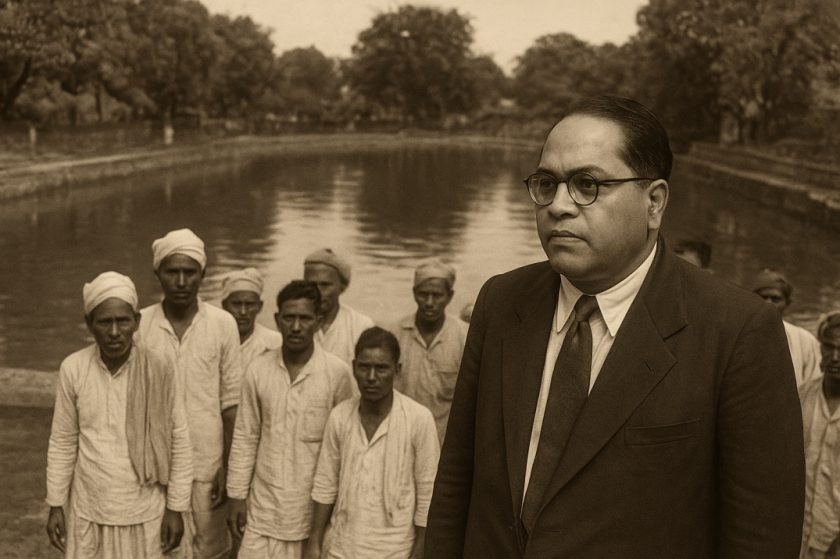
Chavdar Tale Satyagraha 1927: Dr. B.R. Ambedkar’s Historic Fight for Water and Equality in Nashik
Chavdar Tale Satyagraha 1927: Dr. B. R. Ambedkar’s Historic Fight for Water Rights and Social Equality
Introduction
The story of India’s freedom struggle is incomplete without the parallel battle against social inequality.
While the mainstream fight focused on colonial rule, Dr. B. R. Ambedkar led a deeper, civilizational struggle against
caste oppression and untouchability. One of the most powerful milestones in this quest for dignity was the
Chavdar Tale Satyagraha of 20 March 1927 at Mahad (today’s Raigad district, Maharashtra).
This was not merely a protest to drink water; it was a collective assertion of human rights. By exercising their right
to access a public water tank, Ambedkar and thousands of satyagrahis challenged centuries-old social hierarchies.
The Mahad movement became a moral declaration: equality is not to be begged for—it must be claimed.
historically barred from accessing due to untouchability practices.
Background: Why Chavdar Tale Became a Symbol
In early 20th-century India, the caste system restricted Dalits from basic civic facilities—temples, schools, wells,
and even roads. Water, the most elemental resource, became a tool of exclusion and humiliation. Although
municipal bodies were moving towards inclusive policies, social realities remained harsh.
In 1924, the Mahad Municipality passed a resolution opening public places—including the Chavdar
Tale—to all citizens, irrespective of caste. Yet resistance from orthodox groups meant Dalits were still blocked
in practice. The gap between law and lived reality demanded decisive action.
Also Read
Ashoka Vijayadashami: The Festival of Dharma, Victory & Inner Revolution
Samrat Ashok : महान मौर्य सम्राट का जीवन, युद्ध और बौद्ध धर्म की ओर यात्रा
Dalai Lama’s Successor: The Battle Between Buddhist Tradition and China’s Political Ambitions”
The Dhamma Policy of Ashoka: Lessons for Modern Governance
For Ambedkar, the Chavdar Tale represented more than a water source—it symbolized the right to exist with dignity,
to participate equally in public life, and to enjoy the basic amenities of citizenship.
The Satyagraha of 20 March 1927
The movement was meticulously planned as a peaceful, disciplined assertion of rights. On the morning of
20 March 1927, thousands of Dalit men and women assembled in Mahad to hear Dr. Ambedkar. His message was clear
and courageous: “We are not going to the tank to merely drink water, but to assert that we too are human beings.”
- Mass Mobilization: Delegations arrived from surrounding villages, bringing an unprecedented sense of unity.
- March to the Tank: With Ambedkar at the forefront, the procession moved towards the Chavdar Tale.
- Breaking the Barriers: Ambedkar bent down, cupped his hands, and drank the public water; thousands followed.
- The Turning Point: For the first time, Dalits publicly exercised their lawful right to a civic resource.
The act was simple, but its implications were revolutionary: it declared the moral bankruptcy of untouchability.
Symbolism of Water
Water sustains life; denying it is a denial of humanity. By drawing water from the Chavdar Tale, Dalits reclaimed
not just a civic right, but their personhood. The movement reframed the discourse—from charity and permission
to rights and equality. It dissolved the idea that purity and pollution could justify exclusion from public goods.
In that moment, the tank ceased to be a physical boundary and became a moral frontier—crossed with courage.
Backlash and Social Impact
The assertion of equality provoked a fierce reaction. Orthodox groups responded with intimidation and violence.
In a revealing gesture of social hostility, they conducted rituals to “purify” the tank, claiming it had been “defiled.”
But the ground had shifted. No ritual could reverse the psychological victory achieved that day. The satyagraha made
caste oppression visible and undeniable, drawing national attention to the civil rights dimension of India’s freedom struggle.
Ambedkar’s stance remained unflinching: this was not a movement for water alone; it was a movement for human dignity.
Legal Struggle After the Satyagraha
Court cases followed as opponents sought to reassert control. While legal proceedings reflected the tensions of the time—
balancing municipal authority with entrenched social customs—the moral verdict was already clear to the public.
The Mahad Satyagraha catalyzed a chain of organized movements under Ambedkar’s leadership, deepening the resolve of the
oppressed to seek constitutional and social remedies against discrimination.
Legacy of Chavdar Tale Satyagraha
- Beginning of an Organized Dalit Movement: One of the first large-scale civil rights actions led by Ambedkar.
- Assertion of Equal Citizenship: Shifted the discourse from permission to rights over public resources.
- Template for Future Struggles: Inspired later actions, including the Kalaram Mandir Satyagraha (Nashik, 1930).
- National Consciousness: Brought the question of untouchability to the heart of India’s freedom narrative.
Over time, Mahad’s Chavdar Tale has become a commemorative space—honoring the courage of satyagrahis and the vision of
Ambedkar, who would later architect India’s Constitution enshrining equality, liberty, and fraternity.
Also Read
Ashoka Vijayadashami: The Festival of Dharma, Victory & Inner Revolution
Samrat Ashok : महान मौर्य सम्राट का जीवन, युद्ध और बौद्ध धर्म की ओर यात्रा
Dalai Lama’s Successor: The Battle Between Buddhist Tradition and China’s Political Ambitions”
Relevance in Modern Times
Nearly a century later, the call of Mahad remains urgent. The Chavdar Tale reminds us to safeguard equal access to public
goods for all communities; to embed dignity at the core of governance; and to challenge discrimination—overt or subtle—
wherever it persists.
As societies evolve, the Mahad message endures: justice is not complete without social equality. The satyagraha teaches
that democratic rights must be lived in public spaces—not merely written in laws.
Conclusion
The Chavdar Tale Satyagraha of 20 March 1927 was a watershed moment—transforming an ordinary public tank into a
stage for extraordinary courage. Led by Dr. B. R. Ambedkar, thousands affirmed a simple truth: human dignity cannot
be rationed. By lifting water to their lips, they lifted an entire nation’s conscience.
Mahad did not merely quench thirst; it ignited a movement. And that movement still speaks—every time a citizen claims equal
access, every time a law defends dignity, every time a community says: we are equal.
You can certainly see your enthusiasm within the article you write.
The arena hopes for even more passionate writers like
you who are not afraid to mention how they believe. Always go after your heart.
Thank you very much; your encouragement is what inspires us. We will continue to write articles like this in the future, so please keep giving us the strength to do so.