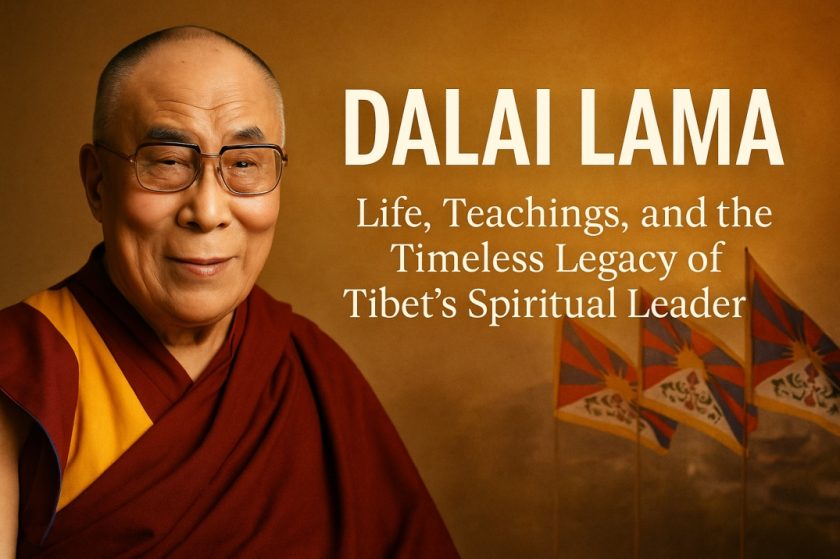
Dalai Lama biography : Life, Teachings, and the Timeless Legacy of Tibet’s Spiritual Leader
Dalai Lama biography : Life, Teachings, and the Timeless Legacy of Tibet’s Spiritual Leader
Introduction
The Dalai Lama biography is one of the most revered figures in the world — a symbol of peace, compassion, and spiritual resilience. Known formally as His Holiness the 14th Dalai Lama, Tenzin Gyatso has not only been the spiritual leader of Tibetan Buddhism but also a global ambassador of non-violence and harmony. His life journey, from a humble village in Tibet to becoming a Nobel Peace Prize laureate, is a testament to the power of compassion in overcoming adversity.
Early Life and Discovery as the Dalai Lama
Born on 6 July 1935 in the small village of Taktser, Amdo, Tibet, Lhamo Thondup (his birth name) was recognized at the age of two as the reincarnation of the 13th Dalai Lama. According to Tibetan Buddhist tradition, the Dalai Lama is believed to be a manifestation of Avalokiteshvara, the Bodhisattva of Compassion.
The search party that identified him followed signs and visions — a centuries-old spiritual process — that led them to the young boy. He was brought to Lhasa and enthroned in 1940 as Tibet’s spiritual and political leader.
Also Read
Ashoka Vijayadashami: The Festival of Dharma, Victory & Inner Revolution
Samrat Ashok : महान मौर्य सम्राट का जीवन, युद्ध और बौद्ध धर्म की ओर यात्रा
Dalai Lama’s Successor: The Battle Between Buddhist Tradition and China’s Political Ambitions”
Challenges of Leadership
By the time the Dalai Lama assumed full political power in 1950, Tibet faced serious challenges. The People’s Republic of China had invaded Tibet, leading to a political crisis. At just 15 years old, he found himself leading his nation through a period of conflict and uncertainty.
In 1959, after a failed uprising against Chinese rule, the Dalai Lama fled to India. He established the Central Tibetan Administration in Dharamshala, Himachal Pradesh — now known as “Little Lhasa” — where he continues to lead the Tibetan exile community.
Teachings and Philosophy
The Dalai Lama’s message is universal. Rooted in Buddhist philosophy, his teachings emphasize:
- Compassion (Karuna): Love and kindness toward all beings.
- Interdependence: The understanding that all lives are connected.
- Non-Violence (Ahimsa): Resolving conflicts without aggression.
- Inner Peace: Finding happiness through mindfulness and self-discipline.
- Religious Harmony: Promoting understanding and respect among different faiths.
His practical approach makes ancient Buddhist wisdom accessible to people of all religions and backgrounds.
Global Influence
The Dalai Lama is not only a religious leader but also a global icon for human rights and peace. Some of his most notable achievements include:
- Nobel Peace Prize (1989): Awarded for his non-violent struggle for Tibet’s freedom.
- Meeting with Global Leaders: Including U.S. Presidents, the Pope, and world activists.
- Author of Over 100 Books: On compassion, happiness, and ethics.
- Advocate for the Environment: Emphasizing the Buddhist responsibility to protect nature.
Through his travels, speeches, and writings, he has touched millions of lives worldwide.
Life in Exile
Since 1959, the Dalai Lama has lived in India, but his influence has never diminished. Dharamshala has become a center for Tibetan culture and Buddhist learning. His exile has also helped Tibetan Buddhism spread globally, as he teaches in universities, spiritual retreats, and public gatherings across continents.
The Dalai Lama often says:
“My true religion is kindness.”
Legacy
The Dalai Lama’s legacy extends far beyond his role as Tibet’s leader. It lies in the values he has championed:
- Peace over Violence: His steadfast refusal to support armed conflict.
- Cultural Preservation: Keeping Tibetan traditions alive despite political suppression.
- Spiritual Education: Making Buddhist principles relevant to modern society.
- Human Values: Encouraging empathy, compassion, and ethical responsibility worldwide.
Even after he steps down from public life, his teachings will continue to inspire generations. His approach to leadership shows that true power lies not in force but in moral authority.
Also Read
Ashoka Vijayadashami: The Festival of Dharma, Victory & Inner Revolution
Samrat Ashok : महान मौर्य सम्राट का जीवन, युद्ध और बौद्ध धर्म की ओर यात्रा
Dalai Lama’s Successor: The Battle Between Buddhist Tradition and China’s Political Ambitions”
Future of Tibetan Leadership
The Dalai Lama has spoken openly about his succession, even suggesting that the institution may not continue in its current form. This has sparked debates within Tibetan and international communities. Regardless of what the future holds, the values he represents are timeless.
Lessons from the Dalai Lama biography
His life offers valuable lessons for everyone:
- Be Compassionate: See the suffering of others and act to reduce it.
- Practice Forgiveness: Even toward those who harm you.
- Live Simply: Focus on inner wealth, not material possessions.
- Stay Resilient: Hardships are opportunities to grow.
- Value Education: Lifelong learning is the key to wisdom.
Conclusion
The Dalai Lama’s life and legacy remind us that leadership is not about power, but about service. His journey from a remote Tibetan village to a global stage proves that compassion and truth have the power to change the world. In times of conflict, his message of peace stands as a guiding light — a reminder that humanity’s true strength lies in kindness. Dalai Lama biography
Also Read
Ashoka Vijayadashami: The Festival of Dharma, Victory & Inner Revolution
Samrat Ashok : महान मौर्य सम्राट का जीवन, युद्ध और बौद्ध धर्म की ओर यात्रा
Dalai Lama’s Successor: The Battle Between Buddhist Tradition and China’s Political Ambitions”
#DalaiLama #TibetanBuddhism #PeaceAndCompassion #BuddhismTeachings #SpiritualLeader #TibetFreedom #DalaiLamaLegacy #Mindfulness #NonViolence #BuddhaWisdom
Note:
Jai Bhim! Namo Buddhay! Friends, welcome to Nagvanshingo. If you find any information on our page incorrect or if you would like to share any additional information with us, please contact us at nagbbs50@gmail.com