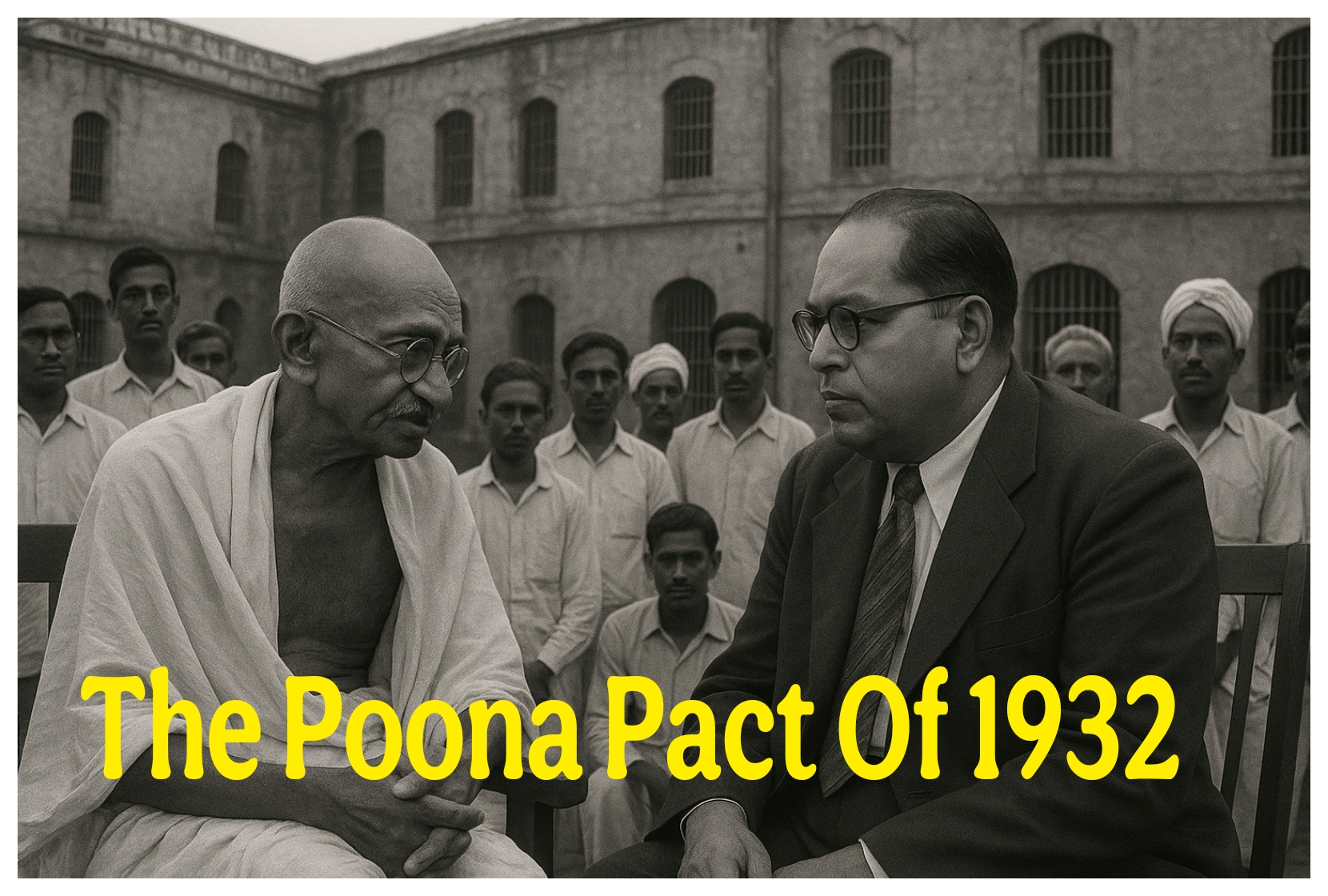
The Poona Pact of 1932: Dr. B.R. Ambedkar, Gandhi, and the Struggle for Dalit Representation
The Poona Pact of 1932: Dr. B.R. Ambedkar, Gandhi, and the Struggle for Dalit Representation
Introduction
The Poona Pact of 1932 remains one of the most debated and transformative events in modern Indian history. Signed between Dr. B.R. Ambedkar, the leader of the Depressed Classes (Dalits), and Mahatma Gandhi, the leader of the Indian National Congress, the pact was born out of conflict, negotiation, and compromise. It was not just an agreement on electoral representation; it symbolized the larger struggle for equality, dignity, and justice in Indian society.
In this blog, we will explore the background, events, terms, and lasting legacy of the Poona Pact, and why it continues to be relevant even today.
The Background: The Communal Award of 1932
In August 1932, the British Prime Minister Ramsay MacDonald announced the Communal Award, which aimed to provide separate electorates for various minority communities, including Muslims, Sikhs, Christians, and most significantly, the Depressed Classes (Dalits).
Also Read
Ashoka Vijayadashami: The Festival of Dharma, Victory & Inner Revolution
Samrat Ashok : महान मौर्य सम्राट का जीवन, युद्ध और बौद्ध धर्म की ओर यात्रा
Dalai Lama’s Successor: The Battle Between Buddhist Tradition and China’s Political Ambitions”
The Dhamma Policy of Ashoka: Lessons for Modern Governance
- For the Dalit community, this meant they would get separate electorates — i.e., only Dalit voters would elect their own representatives.
- For Dr. Ambedkar, this was a historic opportunity for the oppressed classes to gain political independence and secure their rightful representation without being overshadowed by the upper castes.
However, Mahatma Gandhi strongly opposed this provision. He believed that separate electorates for Dalits would divide Hindu society permanently. For Gandhi, unity was essential for India’s freedom struggle, and thus he decided to resist this provision with his fast unto death in Yerwada Jail, Pune.
Gandhi’s Fast and National Uproar
On 20 September 1932, Gandhi began his fast unto death inside Yerwada Jail, protesting against separate electorates for Dalits.
- The country erupted in tension — leaders, social workers, and ordinary citizens were deeply concerned.
- Gandhi’s health began to deteriorate quickly, putting immense moral pressure on Ambedkar.
For Ambedkar, the situation was complex:
- On one side, he wanted to protect the political rights of Dalits through separate electorates.
- On the other side, Gandhi’s death could make the Depressed Classes vulnerable to even greater hostility from caste Hindus.
This moral and political crisis paved the way for the Poona Pact.
Also Read
Ashoka Vijayadashami: The Festival of Dharma, Victory & Inner Revolution
Samrat Ashok : महान मौर्य सम्राट का जीवन, युद्ध और बौद्ध धर्म की ओर यात्रा
Dalai Lama’s Successor: The Battle Between Buddhist Tradition and China’s Political Ambitions”
The Dhamma Policy of Ashoka: Lessons for Modern Governance
🤝 The Poona Pact: Agreement of 24 September 1932
After intense negotiations between Dr. Ambedkar and Gandhi, mediated by other leaders, the Poona Pact was signed on 24 September 1932 at Yerwada Jail.
✅ Key Terms of the Pact:
- Joint Electorates: Dalits would vote in a common electorate along with caste Hindus, rather than having a separate electorate.
- Reserved Seats Increased:
- In the Central Legislative Assembly, reserved seats for Dalits increased from 19 (Communal Award) to 71.
- In provincial legislatures, reserved seats went up to 148.
- Double Vote System: Dalit voters would first vote among themselves to shortlist candidates, and then vote again in the joint electorate.
- Social Reforms: The pact also emphasized fair treatment, equal access to education, and removal of disabilities against Dalits.
🌍 The Significance of the Poona Pact
The Poona Pact was more than just an electoral arrangement. It shaped the future of Indian democracy and had long-term consequences:
- Strengthening Dalit Representation
Though separate electorates were removed, the increase in reserved seats gave Dalits a stronger political voice. - Moral Victory for Gandhi, Strategic Loss for Ambedkar
- Gandhi saw the pact as a way to preserve Hindu unity.
- Ambedkar, however, felt forced to compromise, calling it a “surrender under moral coercion” later in his writings.
- Foundation for Reservation System
The pact laid the groundwork for reservation policies in independent India. The system of reserved seats for Scheduled Castes in legislatures was a direct legacy of this agreement. - Symbol of Tensions Between Equality and Unity
The Poona Pact highlighted the tension between the fight for social justice and the push for national unity. This debate still echoes in Indian politics today.
Also Read
Ashoka Vijayadashami: The Festival of Dharma, Victory & Inner Revolution
Samrat Ashok : महान मौर्य सम्राट का जीवन, युद्ध और बौद्ध धर्म की ओर यात्रा
Dalai Lama’s Successor: The Battle Between Buddhist Tradition and China’s Political Ambitions”
The Dhamma Policy of Ashoka: Lessons for Modern Governance
📖 Dr. Ambedkar’s Reflections
In later years, Dr. Ambedkar openly admitted that he was not happy with the outcome of the pact. He believed that separate electorates would have truly empowered Dalits, whereas joint electorates kept them dependent on upper-caste Hindu voters.
In his words:
“The settlement has left the Scheduled Castes in the hands of the Hindus… It was the greatest calamity.”
Yet, Ambedkar also used the political platform gained through the pact to strengthen Dalit movements, demand equality, and push for constitutional safeguards in independent India.
🔎 Relevance in Modern Times
Even today, the Poona Pact raises important questions:
- Should marginalized communities rely on separate political institutions or work within the existing system?
- How can society balance social justice with unity?
- Is political representation enough without social and economic empowerment?
The pact reminds us that true democracy is not just about votes — it is about dignity, equality, and inclusion.
🏁 Conclusion
The Poona Pact of 1932 was a turning point in India’s history. It symbolized the clash between social justice and national unity, between the vision of Dr. Ambedkar and Mahatma Gandhi. While Gandhi’s fast and moral appeal shaped the outcome, Ambedkar’s relentless struggle ensured that Dalits were never ignored in India’s political future.
Today, as India continues to debate reservation, representation, and equality, the Poona Pact serves as a reminder of the unfinished journey towards social justice.
📌 Final Thought:
The Poona Pact was not the end of Ambedkar’s fight — it was the beginning of a larger revolution that culminated in the Indian Constitution, where he enshrined justice, liberty, equality, and fraternity for all.
#PoonaPact #Ambedkar #DalitHistory #SocialJustice #IndianHistory #Gandhi #Reservation #CivilRights
Note:
Jai Bhim! Namo Buddhay! Friends, welcome to Nagvanshingo. If you find any information on our page incorrect or if you would like to share any! additional! information! with us, please contact us at nagbbs50@gmail.com