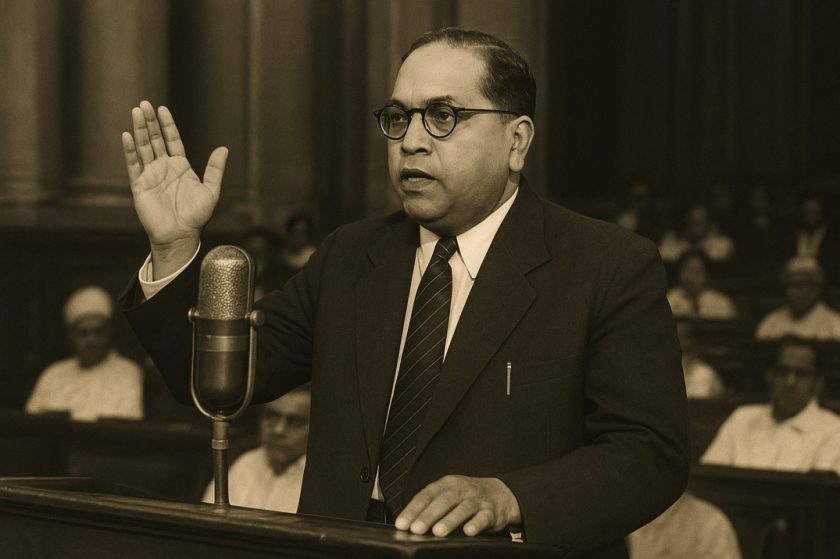
Dr. B.R. Ambedkar: Political Struggles and Leadership that Shaped Modern India
Dr. B.R. Ambedkar: Political Struggles and Leadership that Shaped Modern India
Dr. Bhimrao Ramji Ambedkar, fondly remembered as Babasaheb Ambedkar role in politics, was not only the chief architect of the Indian Constitution but also one of the greatest political leaders of modern India. His life was a saga of relentless struggle against caste-based discrimination and a journey of rising to the forefront of Indian politics. Ambedkar’s political struggles and leadership left a permanent mark on India’s democratic foundation.
This blog will explore his political journey, leadership qualities, struggles, and his role in shaping modern India.
Also Read
Ashoka Vijayadashami: The Festival of Dharma, Victory & Inner Revolution
Samrat Ashok : महान मौर्य सम्राट का जीवन, युद्ध और बौद्ध धर्म की ओर यात्रा
Dalai Lama’s Successor: The Battle Between Buddhist Tradition and China’s Political Ambitions”
The Dhamma Policy of Ashoka: Lessons for Modern Governance
Early Political Struggles
Ambedkar’s entry into politics was not easy. Being born in an oppressed community, he faced social exclusion at every step. However, his education from Columbia University and London School of Economics gave him the intellectual power to challenge oppression.
In the 1920s, Ambedkar began mobilizing the Dalits through Satyagrahas such as:
- Mahad Satyagraha (1927): To claim the right to drink water from Chavdar Talab.
- Kalaram Temple Entry Movement (1930): To demand equal rights in religious spaces.
These movements were not just social reforms but political actions that challenged the caste-based structure of Indian society.
Leadership during the Round Table Conferences
Ambedkar’s political rise took shape during the Round Table Conferences (1930–32) in London, where he strongly represented the voice of Dalits. He demanded separate electorates for depressed classes to ensure their representation in politics.
Though the Poona Pact (1932) modified this demand, it established Ambedkar as a national leader who could negotiate with both the British government and Indian national leaders like Mahatma Gandhi.
Founding Political Organizations
To fight caste discrimination politically, Ambedkar established several organizations:
- Independent Labour Party (1936): Focused on workers, peasants, and Dalits.
- Scheduled Castes Federation (1942): Worked for Dalit rights at the national level.
- Later, he founded the Republican Party of India (RPI), which carried forward his mission.
Through these organizations, Ambedkar provided a political platform to marginalized communities and empowered them to participate in governance.
Also Read
Ashoka Vijayadashami: The Festival of Dharma, Victory & Inner Revolution
Samrat Ashok : महान मौर्य सम्राट का जीवन, युद्ध और बौद्ध धर्म की ओर यात्रा
Dalai Lama’s Successor: The Battle Between Buddhist Tradition and China’s Political Ambitions”
The Dhamma Policy of Ashoka: Lessons for Modern Governance
Role in Indian Constitution
Perhaps the most significant contribution of Ambedkar’s leadership was as the Chairman of the Drafting Committee of the Indian Constitution (1947–50).
- He ensured Fundamental Rights like equality, liberty, and freedom of expression.
- Introduced reservations in education and government jobs.
- Strengthened democracy and social justice principles.
Ambedkar’s vision made the Constitution not just a political document but a social revolution.
Parliamentary Career and Reforms
Ambedkar also served as Independent India’s first Law Minister.
- He brought reforms in Hindu Code Bill to ensure gender equality.
- Worked for economic development through planned economy.
- Stressed the importance of education, irrigation, and industry for India’s progress.
Even when his reforms faced opposition, Ambedkar’s determination never faded, showing his fearless leadership qualities.
Leadership Qualities of Ambedkar role in politics
Dr. Ambedkar’s leadership was marked by:
- Visionary Thinking: He looked beyond immediate struggles and planned for long-term reforms.
- Courage and Determination: He faced opposition from both British rulers and Indian elites but never compromised.
- Empowerment through Education: He believed education was the real weapon for social change.
- Inclusiveness: His leadership was not limited to Dalits but aimed at building an equal society for all Indians.
Legacy of Political Struggles
Ambedkar’s political struggles continue to inspire millions across the globe. His leadership established the principles of democracy, social justice, and human rights in India.
Today, political movements for equality and justice still carry the influence of Babasaheb’s vision. His life is a reminder that politics is not only about power but also about responsibility towards the oppressed.
Conclusion
Dr. B.R. Ambedkar’s political struggles and leadership were not just about gaining power but about transforming India into a just and equal society. From the Mahad Satyagraha to drafting the Constitution, his leadership redefined the meaning of democracy.Ambedkar role in politics
Also Read
Ashoka Vijayadashami: The Festival of Dharma, Victory & Inner Revolution
Samrat Ashok : महान मौर्य सम्राट का जीवन, युद्ध और बौद्ध धर्म की ओर यात्रा
Dalai Lama’s Successor: The Battle Between Buddhist Tradition and China’s Political Ambitions”
The Dhamma Policy of Ashoka: Lessons for Modern Governance
He remains an eternal inspiration for leaders, students, and reformers who dream of a society based on justice, equality, and fraternity.
#BabasahebAmbedkar #AmbedkarLeadership #AmbedkarPoliticalStruggles #IndianConstitution #SocialJustice #AmbedkarLegacy #DalitMovement #Ambedkarite #AmbedkarJayanti #IndianPolitics #AmbedkarEquality
Note:
Jai Bhim! Namo Buddhay! Friends, welcome to Nagvanshingo. If you find any information on our page incorrect! or if you would like to share! any! additional! information! with us, please contact us at nagbbs50@gmail.com