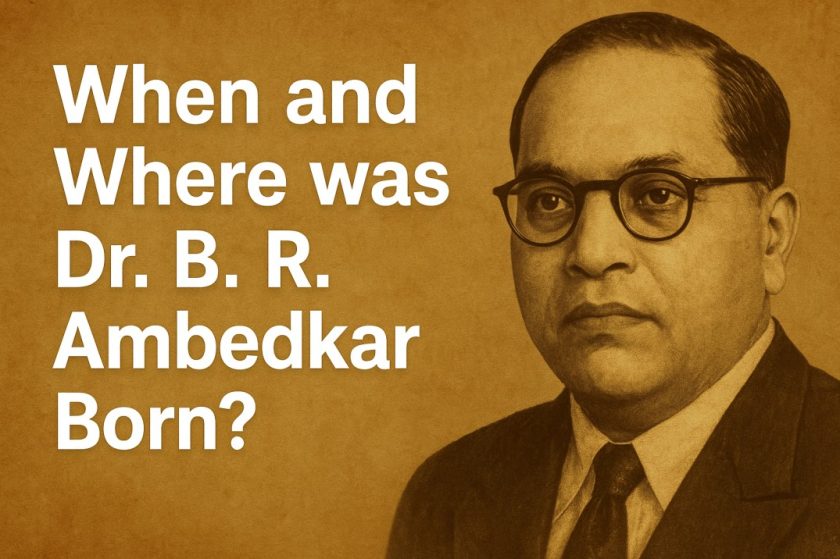
When and Where Was Dr. B. R. Ambedkar Born ?
When and Where Was Dr. B. R. Ambedkar Born ?
Introduction
Dr. Bhimrao Ramji Ambedkar, fondly remembered as Babasaheb, is one of the greatest leaders in Indian history. Known as the principal architect of the Indian Constitution, a social reformer, economist, and crusader for equality, his life story continues to inspire millions across the globe. One of the most frequently asked questions about him is “When and where was Dr. B. R. Ambedkar birth ?” While the answer may seem simple, the historical and social context surrounding his birth reveals why Ambedkar became a symbol of hope for marginalized communities.
In this blog, we will explore not only his birth details but also the social conditions of that time, the significance of his birthplace, and how his early experiences shaped his extraordinary journey.
When Was Dr. B. R. Ambedkar Born?
Dr. Bhimrao Ramji Ambedkar was born on 14 April 1891. This date is commemorated every year as Ambedkar Jayanti, celebrated not only across India but in many parts of the world. His birth anniversary has become a day of reflection, respect, and celebration of his ideals of liberty, equality, and fraternity.
Why is 14 April Significant?
- It is recognized as one of the most important dates in Indian history.
- Ambedkar Jayanti is a public holiday in many Indian states.
- Millions of people, irrespective of caste and religion, pay tribute by visiting his statues, memorials, and writing about his legacy.
Also Read
Ashoka Vijayadashami: The Festival of Dharma, Victory & Inner Revolution
Samrat Ashok : महान मौर्य सम्राट का जीवन, युद्ध और बौद्ध धर्म की ओर यात्रा
Dalai Lama’s Successor: The Battle Between Buddhist Tradition and China’s Political Ambitions”
The Dhamma Policy of Ashoka: Lessons for Modern Governance
Where Was Dr. B. R. Ambedkar Birth ?
Dr. Ambedkar was born in the town of Mhow, in the Central Provinces of British India (now in Madhya Pradesh). Today, this place has been renamed Dr. Ambedkar Nagar in his honor.
About Mhow
- Mhow was a cantonment town during British rule.
- It was primarily a military settlement, which gave Ambedkar’s family access to government quarters, despite their caste status.
- Today, Mhow is internationally recognized as the birthplace of a global icon of social justice.
Family Background
Ambedkar was the 14th and youngest child of Ramji Maloji Sakpal and Bhimabai Sakpal. His father, a Subedar in the British Indian Army, was a strict disciplinarian and valued education. However, the family belonged to the Mahar caste, which was considered “untouchable” under the rigid caste system of the time.
Key Facts About His Family:
- Father: Ramji Maloji Sakpal served in the army but constantly faced caste-based prejudice.
- Mother: Bhimabai passed away when Ambedkar was still very young, leaving him under the care of his father and relatives.
- Siblings: Out of 14 children, only a few survived to adulthood due to poor living conditions and lack of healthcare.
Also Read
Ashoka Vijayadashami: The Festival of Dharma, Victory & Inner Revolution
Samrat Ashok : महान मौर्य सम्राट का जीवन, युद्ध और बौद्ध धर्म की ओर यात्रा
Dalai Lama’s Successor: The Battle Between Buddhist Tradition and China’s Political Ambitions”
The Dhamma Policy of Ashoka: Lessons for Modern Governance
Childhood Struggles
Although born in a military cantonment town, Ambedkar’s childhood was not free from discrimination. Despite his father’s position in the army:
- He and his siblings were often not allowed to sit inside classrooms.
- They were forced to sit separately, away from upper-caste children.
- Teachers hesitated to touch their notebooks, fearing “pollution” due to untouchability.
- Drinking water was denied to him at school unless a peon from a higher caste poured it.
These humiliations in his early life had a profound impact on young Bhimrao, planting in him the determination to fight against caste injustice.
The Name “Ambedkar”
Originally, Ambedkar’s family name was Sakpal. However, during his school years, his teacher, a Brahmin named Mahadev Ambedkar, gave him his own surname “Ambedkar.” This act, though small, gave Bhimrao an identity that would later resonate across the world.
Why Ambedkar’s Birthplace Matters
Mhow, now Dr. Ambedkar Nagar, has become a pilgrimage site for millions. Every year on 14 April, thousands of followers visit his memorial there. The government has also developed institutions and museums to honor his contributions.
Landmarks in Mhow
- Dr. Ambedkar Memorial: Established at his birthplace.
- Educational Centers: Schools and universities named after him.
- Cultural Events: Large gatherings and processions on Ambedkar Jayanti.
This recognition is not just about a birthplace, but about acknowledging the rise of a leader who stood against centuries of oppression.
Legacy of His Early Life
The circumstances of Ambedkar’s birth and early struggles shaped his philosophy. Despite being born in a so-called “low caste,” he rose to become one of the most educated Indians of his time. His life is a testimony to the power of education, determination, and resilience.
Lessons from His Birth Story
- Caste should not define destiny.
- Education is the true path to liberation.
- Social reform begins with challenging injustice at every level.
Also Read
Ashoka Vijayadashami: The Festival of Dharma, Victory & Inner Revolution
Samrat Ashok : महान मौर्य सम्राट का जीवन, युद्ध और बौद्ध धर्म की ओर यात्रा
Dalai Lama’s Successor: The Battle Between Buddhist Tradition and China’s Political Ambitions”
The Dhamma Policy of Ashoka: Lessons for Modern Governance
Conclusion
Dr. B. R. Ambedkar was born on 14 April 1891 in Mhow (now Dr. Ambedkar Nagar), Madhya Pradesh. From this humble beginning, marked by poverty and caste discrimination, emerged a man who gave India its Constitution and dedicated his life to fighting for equality. His birth is not just a date on the calendar—it is the birth of an idea, a revolution, and a lifelong struggle for justice.
Today, as millions celebrate his birth anniversary, we are reminded that his life story is a guiding light for building a society based on equality and human dignity.
B. R. Ambedkar birth, Ambedkar birthplace, Ambedkar Jayanti, Babasaheb Ambedkar history, Ambedkar Nagar, Mhow, Ambedkar family background, Ambedkar childhood struggles, Ambedkar early life, Dalit leader, Indian Constitution architect, Ambedkar memorial, Dr. Ambedkar Nagar
#BRAmbedkar, #AmbedkarJayanti, #BabasahebAmbedkar, #AmbedkarBirthplace, #IndianConstitution, #SocialJustice, #AmbedkarLegacy, #Mhow, #AmbedkarNagar, #DalitHistory, #EqualityForAll
Note:
Jai Bhim! Namo Buddhay! Friends, welcome to Nagvanshingo. If you find any information on our page incorrect or if you would like to share any! additional! information! with us, please contact us at nagbbs50@gmail.com